



Ice bath
Cold Water Therapy: What the Science Actually Says (And Why It Matters for You)
Apr
In this article:
Cold water therapy has moved from elite locker rooms to mainstream wellness, and the science behind it is more compelling than most people realise. This article breaks down the verified research on what cold water immersion actually does to your body and brain, corrects some of the most common myths and inflated claims circulating online, and gives you a practical, evidence-based protocol to follow.
Whether you’re an athlete chasing faster recovery, someone interested in the mood and focus benefits, or simply curious about whether the hype is real, here’s what you need to know.
What you’ll learn:
- The four core physiological mechanisms behind cold water immersion, including DOMS reduction, neurochemical response, brown fat activation, and sleep quality
- What the peer-reviewed research actually shows — and where some popular claims don’t hold up
- The one important exception for people focused on building muscle
- A simple three-phase protocol to get started safely, based on current evidence
- Why the equipment you use has a direct impact on whether the practice works long-term
Read time: Approximately 10 minutes
There is a moment, usually around the 3-second mark of your cold water therapy ice bath plunge, when your body and brain reach a temporary disagreement. Your brain says, Okay, you’re done, leave now’. Your body is already managing the situation. And by the time you come out – gasping, alert, blood moving like it means something, you understand why this practice has persisted through centuries of use and is now attracting serious scientific attention.
Cold water therapy is not a trend cooked up by wellness influencers. It is one of the most well-researched recovery and performance modalities in sports science, and its benefits extend well beyond the gym. But because so much of what circulates online about ice baths is either oversimplified or outright wrong, it’s worth looking at what the research actually shows – and what it doesn’t.
This is that article.
Why People Are Taking Cold Water Therapy Seriously
The global cold plunge and ice bath market was valued at approximately USD $350 million in 2022 and is projected to grow steadily through the decade, driven by accelerating adoption across professional sport, fitness facilities, spas, and residential wellness (Transparency Market Research, 2023). Over 70% of professional sports teams in North America now report using cold water immersion as part of their recovery protocols (Brass Monkey Health, 2024), and that figure is mirrored across elite sport globally.
But it’s the mainstream crossover that signals something more durable than hype. People are putting ice baths in their homes, their garages, and their gym changerooms, not because an athlete told them to, but because they’ve read the research and tried it themselves.
So what does the research actually show?
The Physiology: What Happens When You Get In
Cold water immersion triggers a coordinated cascade of physiological responses. Understanding them helps you use cold therapy smarter, not just harder.
Vasoconstriction and the vascular flush
When your body hits cold water (typically 10 to 15°C), peripheral blood vessels constrict sharply. Blood is redirected toward your core and vital organs. When you get out, those vessels dilate again, driving a flush of blood back through muscle tissue, clearing metabolic waste products, including lactate and inflammatory cytokines. This vascular cycling is one of the primary mechanisms behind cold water immersion’s effect on post-exercise recovery. Sounds intense, right? It kinda is!
Reducing muscle damage and soreness
The evidence here is robust. A meta-analysis by Machado et al. (2016), published in Sports Medicine and drawing on randomised controlled trials across multiple databases, found that cold water immersion significantly reduces delayed-onset muscle soreness (DOMS) compared to passive recovery.
The study found optimal effect at water temperatures of 11 to 15°C and immersion durations of 10 to 15 minutes. A more recent 2022 meta-analysis published in Sports Medicine (Moore et al.) confirmed that cold water immersion was an effective recovery tool after high-intensity exercise, with positive outcomes for muscular power, muscle soreness, creatine kinase levels, and perceived recovery at 24 hours post-exercise.
The research also found that shorter durations and lower temperatures tended to produce the largest beneficial effects on certain performance markers, which reinforces the idea that protocol matters.
One important nuance: the evidence is strongest for high-intensity and cardiovascular exercise. After strength training with hypertrophy as the goal, cold water immersion applied too soon after your session may blunt some of the acute inflammatory signalling that triggers muscle protein synthesis. This doesn’t mean avoid cold therapy entirely, it means time it strategically.
Most practitioners and sports scientists recommend waiting at least six hours post-strength session, or using cold immersion on recovery days rather than immediately after lifting.
The Neurochemical Response
Now we’re getting serious!
This is where cold water therapy gets genuinely interesting for people who aren’t just chasing physical performance. Research shows that cold water immersion produces significant increases in norepinephrine (noradrenaline), the neurotransmitter central to focus, alertness, mood regulation, and stress resilience.
A study by Šrámek et al. (2000), published in the European Journal of Applied Physiology, found that immersion in cold water (circa 14°C) induced increases in plasma norepinephrine and dopamine concentrations of up to 530% and 250%, respectively.
These effects were not fleeting and they persisted for several hours post-immersion. More recent research by Eimonte et al. (2021), published in the International Journal of Hyperthermia, replicated these neurochemical findings with shorter, more practical immersion sessions (14°C for roughly 10 minutes), with norepinephrine and epinephrine remaining significantly elevated for hours after the session.
Norepinephrine is not a marginal neurotransmitter. It is centrally involved in how your brain handles different levels of stress, it maintains attention, and regulates mood. It’s also one of the primary targets of many antidepressant medications.
This is why researchers, including Dr Susanna Soberg whose 2021 work in Cell Reports Medicine examined the metabolic effects of cold and heat exposure on brown fat activation have described the neurochemical response to cold exposure as one of the more compelling non-pharmacological findings in recent wellness research.
With that being said, clinical trials using cold water immersion as a treatment for depression or anxiety in at-risk populations remain limited, and the field is still developing. The mechanistic rationale is strong; the clinical evidence is promising but not yet conclusive.
Brown fat activation and metabolic health
Brown adipose tissue, or known as (BAT) is a metabolically active type of fat that generates heat rather than storing energy. Unlike white fat, BAT burns glucose and fatty acids to produce warmth, and regular cold exposure is one of the known stimuli for BAT activation.
Soberg et al. (2021) demonstrated that regular cold exposure protocols significantly increased BAT activity and metabolic rate, with improvements in cold-induced thermogenesis and insulin sensitivity.
For people interested in body composition and metabolic health, this is a meaningful finding, though it’s worth noting the population studied were experienced winter swimmers, and effect sizes in less cold-adapted individuals may vary.
Sleep quality
This is where it gets interesting! The core body temperature drop is a primary physiological trigger for sleep onset. Post-exercise cold water immersion accelerates this temperature reduction, which may facilitate faster sleep onset and improved sleep architecture.
Athletes using cold water immersion post-training consistently report improvements in subjective sleep quality, and this aligns with what we understand about thermoregulation and the circadian rhythm of core temperature.
The research here is less systematically reviewed than the DOMS literature, but the mechanistic basis is sound and anecdotal evidence is consistent across sports and general wellness populations.
If you’re finding the opposite, and you do not have a good sleep post cold water therapy, then pull back the hours you plunge to 6pm, and see if this then improves your sleep quality – its trial and error.
What the Research Has Been Revised On
Intellectual honesty matters here, especially because a lot of cold therapy content online doesn’t bother with it.
A large population, some reports are up to 89% of professional athletes use cold water immersion to recover and this statistic that circulates widely on social media is not traceable to a peer-reviewed source, and should be treated with appropriate scepticism.
The real figure for North American professional sports teams adopting CWI protocols is substantial but more conservatively cited at over 70%, based on industry survey data.
The “300% norepinephrine increase” that frequently appears in cold water therapy content is an understatement of what the literature actually shows (real measurements suggest increases of up to 530%), but the specific figure is sourced to multiple distinct studies using different protocols, so any single percentage claim should be understood as protocol-dependent, not universal.
The broader “sports recovery market” figures often cited in the media ($18 billion and above) refer to the entire recovery equipment and services industry, including compression, physiotherapy, massage technology, and more. The specific cold plunge and ice bath market is considerably smaller, around $350–376 million in 2022, but growing consistently and seeing strong residential adoption as portable, affordable solutions improve.
None of these corrections weakens the case for cold water therapy. They strengthen it because they anchor it in verifiable evidence rather than inflated claims.
How to Build a Protocol That Actually Works
The research is detailed that cold water immersion is protocol-dependent. Getting into water of vague temperature for an indeterminate amount of time will not produce the same outcomes as a deliberate, consistent protocol. Here is what the evidence points toward.
Temperature
The effective therapeutic range is broadly 10 to 15°C. Research consistently identifies this range as delivering the best balance of recovery benefits and tolerance. Below 8°C, benefits do not scale proportionally for most people, and risks increase significantly. Above 18°C, the stimulus is insufficient to drive a meaningful physiological response in most users – it’s the temperature of sea water when you think about it.
Duration
The Machado et al. (2016) meta-analysis found optimal DOMS reduction at 10 to 15 minutes at 11 to 15°C. Shorter sessions (5 to 10 minutes) still provide meaningful acute recovery and neurochemical benefits.
Longer sessions beyond 20 minutes offer diminishing returns and increase hypothermia risk in colder water. – bear in mind, if you feel uncomfortable, get out. If you are trialing something where the water is less than 5 degrees, ensure someone is with you.
Frequency
For recovery purposes, 3–4 sessions per week following intense training is well-supported. For mental performance and norepinephrine stimulus, morning sessions before cognitive work are increasingly popular, though the research specifically on timing is still emerging.
Progression
If you’re new to cold water immersion, acclimatisation matters. Start at 15 to 18°C for 3 to 5 minutes, three times per week. Over two to four weeks, reduce temperature toward your target range and extend duration incrementally. The goal is a controlled, repeatable stimulus, not a survival exercise and who can last the longest!
The hypertrophy exception
If your training is primarily resistance-based and you’re focused on building muscle, use cold water therapy immersion strategically.
Avoid immediate post-session cold immersion on strength days if hypertrophy is the priority. Instead, use cold on non-lifting days, or time it at least 6 hours after a heavy session. The research on this (including work by Roberts et al., 2015, published in the Journal of Physiology) indicates that regular post-exercise cold immersion can attenuate long-term muscle and strength adaptations when applied immediately after resistance training, a finding that doesn’t apply with the same force to high-intensity cardiovascular or team sport training.
Safety: Who Should Be Careful
Cold water therapy is not appropriate for everyone. Contraindications include Raynaud’s disease, unmanaged hypertension, peripheral artery disease, cardiovascular conditions, including certain arrhythmias, cold urticaria, and open wounds or skin infections.
If any of these apply to you, consult a qualified health professional before beginning.
For everyone else, the principal risks are psychological rather than physiological, specifically, the cold shock response that can cause hyperventilation and, in extreme cases, cardiac stress.
This is why controlled entry and breathing techniques matter. If you’re new, or as I mentioned before, you plan on going to new cold temperatures that you’ve never tried before, then never plunge alone. Enter slowly. Get your breathing under control before submerging further.
Start in summer when the shock response is more manageable.
The Compliance Problem. And Why Equipment Matters More Than People Think
Here is something the research rarely addresses directly but that practitioners know intuitively: the protocol that works best is the one you actually follow.
Consistent cold water therapy requires a consistent stimulus. That means getting in the water at the right temperature, at the right frequency, without so much friction in the setup process that you skip it when motivation dips, which it will, especially in winter, especially on hard training weeks when you’re also most sore and most in need of recovery.
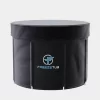
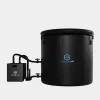
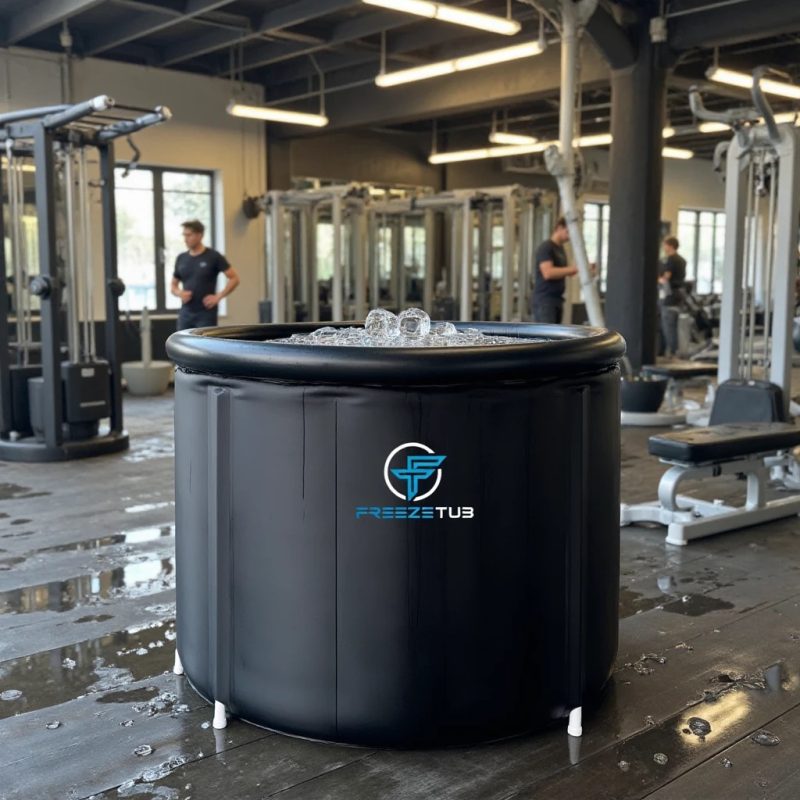
This is the core argument for purpose-built portable ice bath equipment. An improvised bathtub setup requires large quantities of ice, offers poor temperature retention, provides insufficient depth for full immersion, and creates enough logistical friction that the protocol becomes inconsistent. Inconsistency is the primary reason most people don’t see the results that the research predicts.
The athletes, gym-goers, and health-focused individuals who report the strongest results from cold water therapy share one common factor: they have a reliable, low-friction way to get into cold water regularly. The science is settled enough. The remaining variable is access.
A Practical Starting Point
If you’re new to cold water therapy, here is a simple, evidence-based entry protocol.
In weeks 1 and 2, aim for water at 15 to 18°C for 4 to 5 minutes per session, 3 sessions per week. Focus on controlled breathing throughout. You can try a box breath pattern (four counts in, four hold, four out, four hold) works well and has physiological justification in terms of managing the cold shock response.
Expect discomfort.
Expect it to ease within the first two minutes once you regulate your breathing.
From weeks 3 to 6, reduce to 12–15°C and extend sessions to 8 to 12 minutes. Begin tracking how you feel in the 24–48 hours after sessions. How are the soreness levels, the sleep quality or mood?
Most people notice something meaningful in this range, which sustains motivation through the harder entry conditions.
From week 7 onwards, you’re working in the performance protocol range: 10–13°C, ten to fifteen minutes, three to five sessions per week. At this point, the practice is no longer effortful in the way it was. It’s simply part of the week.
The Bottom Line
Cold water therapy works. The physiological mechanisms are well understood. The peer-reviewed evidence for DOMS reduction, neurochemical response, and metabolic adaptation is solid and growing. The practice has moved well beyond elite sport into mainstream wellness, and for good reason.
What it is not is magic. It won’t compensate for poor sleep, poor nutrition, or inadequate training load management. It is a recovery and performance tool — a significant one, applied correctly — not a substitute for the fundamentals.
If you’re serious about recovery, performance, or simply feeling better and thinking more clearly consistently, cold water therapy deserves a place in your routine.
The science supports it. The only thing left is to get in.
Freeze Tub is New Zealand’s leading portable ice bath retailer. Visit freezetub.co.nz to explore our range.
References
Eimonte, M., et al. (2021). Residual effects of short-term whole-body cold-water immersion on the cytokine profile, white blood cell count, and blood markers of stress. International Journal of Hyperthermia, 38(1), 696–707.
Machado, A.F., et al. (2016). Can water temperature and immersion time influence the effect of cold water immersion on muscle soreness? A systematic review and meta-analysis. Sports Medicine, 46(4), 503–514.
Moore, E., et al. (2022). Impact of cold-water immersion compared with passive recovery following a single bout of strenuous exercise on athletic performance in physically active participants: a systematic review with meta-analysis and meta-regression. Sports Medicine, 52(7), 1667–1688.
Roberts, L.A., et al. (2015). Post-exercise cold water immersion attenuates acute anabolic signalling and long-term adaptations in muscle to strength training. Journal of Physiology, 593(18), 4285–4301.
Søberg, S., et al. (2021). Altered brown fat thermoregulation and enhanced cold-induced thermogenesis in young, healthy, winter-swimming men. Cell Reports Medicine, 2(10), 100408.
Šrámek, P., et al. (2000). Human physiological responses to immersion into water of different temperatures. European Journal of Applied Physiology, 81, 436–442.
Transparency Market Research. (2023). Cold plunge pools market size, share & trends analysis. globenewswire.com.
